
Did you know that many queer and transgender individuals face ongoing microaggressions and political hostility even in seemingly accepting cities like New York? This reality deeply impacts their mental health and personal resilience, making tailored therapeutic support essential for queer and trans women and men to build lasting community connection and social support.
In this article, we explore comprehensive strategies to foster personal resilience, community connection, and social support for queer and transgender clients navigating challenging environments, emphasizing mental health and trans resilience. Drawing on expert insights from Teresa Thompson LCSW of Salt River Therapy, we unpack how affirming therapy, understanding family and cultural complexities, and building personal and community safety can empower individuals with diverse gender identities to thrive in the face of adversity.
What You'll Learn
Key factors influencing resilience for queer and transgender clients
How affirming therapy supports mental health and resilience
Navigating family dynamics and cultural expectations
Identifying green flags and red flags in therapy
Building personal and community resilience in hostile environments

Startling Realities: The Mental Health Challenges Facing Queer and Trans People
Understanding the Unique Pressures on Queer and Transgender Individuals
Trans and queer individuals often live with the heavy burden of feeling sidelined, even in areas known for LGBTQ acceptance, which significantly affects their mental health outcomes. Teresa Thompson, of Salt River Therapy, explains, "Queer and trans clients often experience the pressure of being on the outside looking in, even in accepting cities like New York. The subtle microaggressions and anti-trans political climate add layers of stress that impact mental health and resilience. " This sense of 'otherness' contributes to a chronic stress that can undermine emotional well-being.
The current political hostility towards trans people adds an existential layer of anxiety about safety and future stability. These stressors are not experienced by most people require awareness and sensitivity from mental health professionals. The ongoing pressures can result in feelings of isolation and heightened emotional distress, emphasizing the vital need for therapeutic environments that recognize and validate these experiences.
Defining Resilience for Queer and Trans Clients in Mental Health Contexts
The Role of Sexual Orientation and Gender Identity in Therapy
Resilience for queer and trans clients involves confronting and adapting to unique stressors tied to sexual orientation, gender identity, social support systems, and community connection. Understanding how these marginalized identities intersect with the broader social context enables therapists to offer nuanced support. Therapy becomes a safe space to explore sexual orientation and gender identity, helping clients build coping strategies that affirm each client's personal resilience and unique journey rather than imposing generalized assumptions.
The goal is empowering individuals to reclaim agency over their identity narratives and mental health. Research shows that therapists who approach sessions with curiosity—asking clients, "What does your queer or transgender identity mean to you?"—lay the groundwork for trans resilience and personalized mental health support.
Transgender Resilience: Navigating Political and Social Challenges
Transgender resilience specifically must factor in the current anti-trans legislative and social climates that influence daily living experiences. Teresa Thompson highlights the intersection of political stress and personal identity: "Trans people also have the increasing pressure of living in an anti-trans political climate, which brings multiple stressors in day-to-day living and existential concerns. "
Building transgender resilience in this context means equipping clients with strategies to navigate hostile environments, maintain a positive self-concept, and foster hope for safer futures through affirming therapy, strong community connection, and robust social support. Therapy acts as a refuge and training ground for developing resilience and strengthening psychological stamina.

Creating Affirming Therapy Spaces: What Truly Affirming Therapy Looks Like
Teresa Thompson emphasizes, "A truly affirming therapist sees you as a unique individual, not just a set of statistics or best practices. They partner with you on your goals, respecting your lived experience and identity. "
Language and Practices That Foster Safety and Trust
One of the most important aspects of affirming therapy is creating a safe space where queer and trans clients feel seen, heard, and supported without judgment. This begins with language: using correct pronouns, validating clients' experiences, and avoiding assumptions. Teresa Thompson explains that understanding what being queer or trans means to each client individually is foundational in Salt River Therapy's practice.
This individualized approach counters the "one-size-fits-all" methodology by offering multiple therapeutic paths tailored to the client's needs. Transparency and collaboration reinforce client autonomy, fostering trust and safety that are essential for therapeutic progress.
As clients and therapists work together to foster trust and resilience, it's not uncommon to encounter periods where progress feels stalled. If you’re curious about how to navigate these moments and keep therapeutic momentum, you may find practical strategies in this guide to handling therapy plateaus, which offers insights for both clients and clinicians.
Rebuilding Trust After Harmful Therapy Experiences
Unfortunately, many trans and queer clients come to therapy with histories of invalidation or trauma from prior providers. Teresa Thompson advocates for transparency and choice: "It can really build a sense of safety to understand what approach your therapist is bringing into the room and why, as well as feeling that the space is open to ask questions and to challenge approaches if you feel it's not comfortable. "
Therapists dedicated to affirming care work actively to repair this trust by validating the client's lived experience, ensuring a collaborative process where clients can select the therapeutic methods that resonate with them. This approach acknowledges past harms and works intentionally to foster healing and empowerment.

Common Mistakes Therapists Make with Queer and Trans Clients
Over-focusing or Ignoring Identity in Therapy
Therapists can fall into the trap of either overemphasizing a client's queer, trans, or nonbinary identity to the exclusion of everything else, or ignoring it altogether in a misguided attempt at neutrality. Both extremes can leave clients feeling alienated and unseen. What clients need is to have their full selves recognized—their identity acknowledged as a meaningful part of who they are, without being pathologized or reduced to a label.
Striking this balance requires active listening, genuine flexibility, and a willingness to follow the client's lead from session to session. Teresa Thompson notes that affirming therapy means understanding the client's lived personal experience rather than applying generalized or stereotypical frameworks. This means staying curious about how identity, chosen family, lived experience, and personal history all weave together, rather than arriving with assumptions about what any of those things should look like.
Assumptions About Intersectional Identities and Spirituality
Intersectionality adds layers of complexity to the therapeutic process, and when therapists bring unexamined assumptions into the room, it can get in the way of genuine support. Presuming that all queer people of color come from rejecting families, or dismissing the spiritual lives of LGBTQ+ and nonbinary individuals, are examples of the kind of thinking that can quietly undermine trust and make clients feel reduced rather than understood.
Therapists need to approach each client with openness and curiosity, exploring identities, cultural backgrounds, chosen family dynamics, and belief systems without defaulting to stereotypes. This kind of attentiveness creates an environment where clients feel valued in their full complexity, not just the parts of themselves that fit neatly into a clinical framework.

Navigating Complex Family Dynamics and Cultural Expectations
Supporting Clients Facing Family Rejection or Conditional Acceptance
Teresa Thompson notes, "Every queer and trans person’s family story is unique. Therapy helps clients decide what kind of relationship they want and supports them in navigating that path. "
Trans and queer clients often grapple with family rejection or conditional acceptance, which can deeply affect mental health. Therapy helps by exploring the specific familial dynamics and understanding whether there is potential for growth or if grieving the relationship is necessary.
By centering client agency in these decisions, therapists empower clients to define what family means to them and how to move forward with or without traditional familial support. This approach respects the nuanced realities clients face, especially in complex family systems.
Addressing Additional Layers for First-Generation and Queer People of Color
For trans and queer clients who are also first-generation or people of color, cultural expectations and gender roles add critical layers to explore. These added factors can complicate family interactions and personal identity expression.
Therapists must acknowledge these layered identities and the unique pressures they bring. Recognizing the diversity within trans and queer communities ensures that therapy is culturally competent and responsive to clients' lived realities.
Green Flags and Red Flags When Choosing a Therapist for Queer and Trans Clients
Questions to Ask Potential Therapists
When searching for an affirming therapist, clients should feel empowered to ask direct questions about experience and approach before committing to working together. A question like "How have you approached therapy with clients whose identities you initially weren't familiar with?" can reveal a therapist's adaptability, willingness to learn, and genuine cultural competence—qualities that matter far more than simply checking a box.
Asking how their approach to working with trans and queer clients differs from other populations is another useful way to assess whether a therapist centers client-specific needs or defaults to a generic framework. A thoughtful answer will demonstrate awareness of minority stress, intersecting identities, and the unique dynamics that shape queer and transgender experiences in and outside of the therapy room.
It is also worth asking how a therapist handles moments when a client feels misunderstood or when an approach isn't working. This reveals whether they are open to feedback and willing to adjust, both of which are essential qualities in an affirming therapeutic relationship. Questions like "How do you stay current on issues affecting queer and trans communities?" and "How do you approach cultural and intersectional factors in your work?" can further illuminate whether a therapist brings genuine curiosity and ongoing learning to their practice, rather than relying on assumptions or outdated frameworks.
Finally, practical questions matter too. Asking about confidentiality, session structure, and how goals are set and revisited helps clients understand what the therapeutic process will actually look like, and ensures they feel informed and empowered from the very beginning.
Recognizing Affirming and Non-Affirming Behaviors
Green flags include therapists who ask thoughtful, follow-up questions about identity and lived experience, who use inclusive and accurate language without being prompted, and who genuinely create space for clients to guide the direction of the therapeutic process. An affirming therapist approaches each session with curiosity rather than assumption, welcomes feedback, and demonstrates an ongoing commitment to understanding the full complexity of a client's life, not just the parts that fit neatly into a clinical framework.
Red flags, on the other hand, can be subtle or overt. Therapists who display visible discomfort around queer or trans identities, consistently use incorrect pronouns or outdated terminology, or adopt a prescriptive approach that ignores client preferences are signaling that their care may not be truly affirming. Similarly, a therapist who over-focuses on a client's identity as the source of all problems—or who avoids addressing it altogether—is likely missing the nuance that effective queer and trans affirming therapy requires. Any dynamic where the client feels they need to educate or manage their therapist is a sign that the fit may not be right.
Choosing a therapist who embodies genuinely affirming practices is fundamental not just for comfort, but for building the kind of trust that makes meaningful therapeutic work possible. For trans and queer clients who have already navigated a lifetime of having their identities questioned or dismissed, finding a provider who gets it—without having to explain themselves at every turn—can be genuinely transformative.

Supporting Clients Who Are Questioning or Fluid in Their Sexual Orientation or Gender Identity
The Role of Identity Labels in Therapy
Supporting Clients Who Are Questioning or Fluid in Their Sexual Orientation or Gender Identity
The Role of Identity Labels in Therapy
Identity labels can serve many different purposes depending on the person—for some, they offer a sense of community, communication, and belonging; for others, they can feel limiting or premature. Teresa Thompson reminds us, "It's important to understand what, if anything, an identity label might mean for you." Therapy offers a supportive, pressure-free space to explore what labels mean to each individual client, without any expectation that they arrive at a fixed or final answer.
This flexibility is especially important for clients who are questioning or whose understanding of their identity is still unfolding. Identity is not always a destination, and affirming therapy honors that reality by creating room for ambiguity, evolution, and self-definition at whatever pace feels right. In a non-judgmental environment, clients can explore the full range of their experience without feeling rushed toward a conclusion that may not yet feel true.
Therapy as a Space for Exploration Beyond Crisis
Therapy is not only for moments of acute distress; it is also a powerful tool for growth, self-discovery, and building a deeper awareness of oneself over time. Teresa Thompson notes that therapy can "be useful at any phase of life," inviting clients to explore possibilities, strengthen their sense of self, and develop resilience proactively rather than reactively. This reframe is particularly meaningful for trans and queer clients who may have internalized the idea that seeking support requires a crisis to justify it.
Engaging with therapy as an ongoing source of reflection and empowerment—rather than a last resort—allows clients to build the internal resources they need to navigate minority stress, relationships, and identity with greater confidence and clarity. The therapeutic relationship, at its best, becomes a consistent and trusted space where growth is always possible, regardless of what stage of life a client is in.

Building Resilience and Safety in Hostile Environments
Strategies for Developing Personal Resilience
In hostile or unsupportive environments, developing resilience becomes a critical lifeline for queer and trans individuals. Teresa Thompson advises, "Prioritizing safety within yourself and exploring pathways to safer spaces are key to sustaining resilience for queer and trans clients." This internal foundation is not about accepting harmful circumstances as permanent; it is about maintaining a strong enough connection to one's own sense of worth and identity to keep moving forward, even when the external world makes that difficult.
Developing personal resilience involves daily self-care practices, mindfulness, and boundary-setting that actively protect mental health over time. These are not abstract concepts but practical, concrete tools that can make a meaningful difference in how queer and trans individuals navigate ongoing adversity, political hostility, and the cumulative weight of minority stress. Therapy plays an important role in helping clients identify which strategies resonate most with their lives and personalities, and in supporting them to integrate those strategies in sustainable, lasting ways. The goal is to build a resilience that is genuinely felt, not just performed.
Creating Community Connection and Social Support
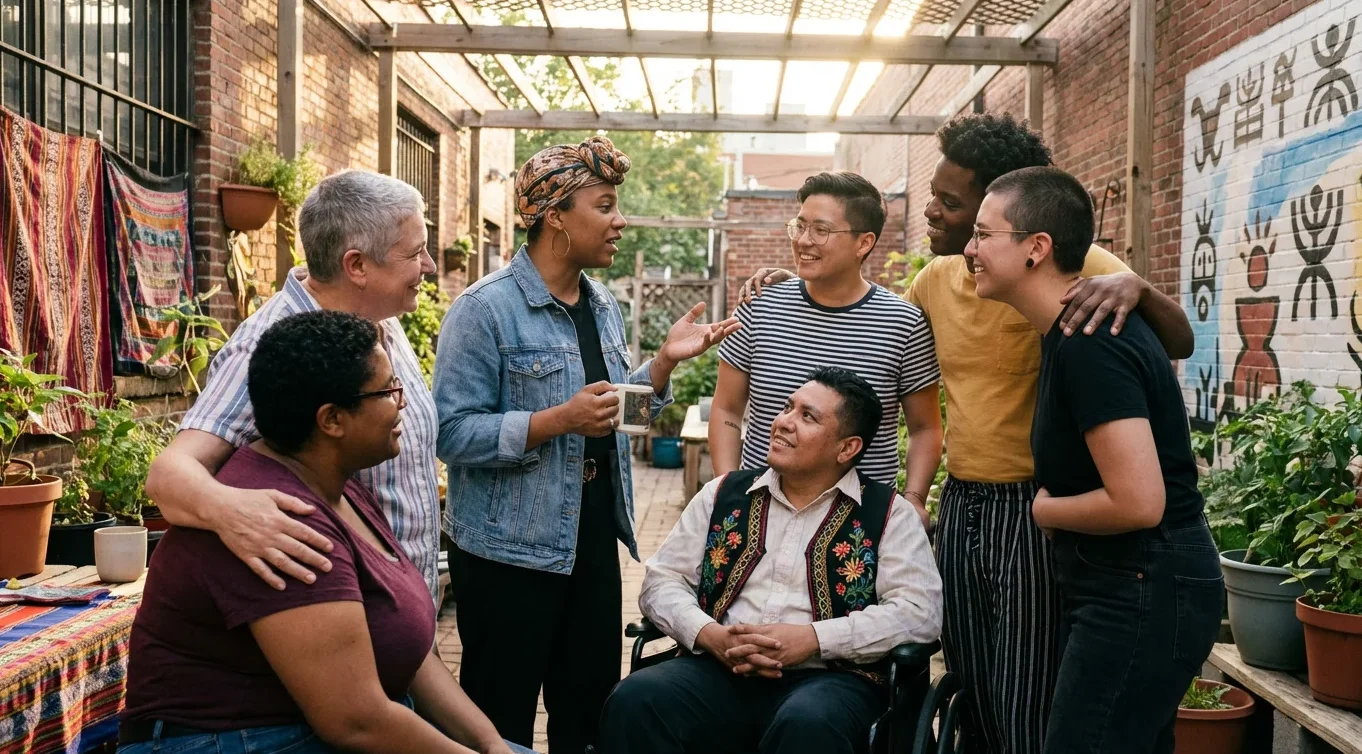
Social support networks and community connection are vital for queer and trans clients seeking a sense of belonging, safety, and improved mental health outcomes. Isolation is one of the most damaging effects of hostile environments, and building intentional pockets of support can directly counteract it, fostering not just resilience, but genuine joy and a sense of being known and valued. These connections remind queer and trans individuals that they are not navigating the world alone.
Therapists actively encourage queer and trans clients to seek out affirming friendships, chosen families, and community groups that reflect and celebrate who they are. These networks create additional layers of protection and empowerment that extend well beyond the therapy room, reinforcing the work being done in sessions and providing ongoing sources of strength and connection. For many clients, building and nurturing these relationships becomes one of the most transformative aspects of their healing journey.

People Also Ask
What are the unique mental health challenges faced by queer and trans individuals?
Queer and trans individuals often face microaggressions, discrimination, and societal exclusion that contribute to chronic stress and anxiety that accumulates in ways that are deeply damaging over time. The broader political climate adds another layer of psychological weight, as legislative attacks on queer and trans rights can make the world feel increasingly hostile even for those in relatively supportive personal environments. Family rejection compounds these challenges further, striking at the most foundational sense of belonging a person carries, creating a mental health landscape that requires informed, affirming care to address effectively.
How can therapy be tailored to support transgender resilience?
Therapy that supports transgender resilience begins with a thorough understanding of the sociopolitical stressors shaping a client's daily experience, treating them as central to the work rather than background context. This means validating each client's unique identity without pathologizing it, and maintaining flexible, transparent approaches that adapt to their specific and evolving needs. A skilled therapist helps clients develop practical tools for managing minority stress and building internal safety, empowering clients not just to endure difficult circumstances, but to thrive beyond them.
What questions should queer and trans clients ask therapists before starting therapy?
Before committing to a therapeutic relationship, clients should ask directly about a therapist's experience with queer and trans identities and how that experience has shaped their approach. Questions like "How have you handled situations where you were unfamiliar with a client's identity?" reveal whether a therapist leads with humility and a genuine willingness to learn. It is also worth asking how they respond when a client feels misunderstood as this signals whether they are open to feedback and willing to adapt when something isn't working.
How can queer and trans people build resilience in unsupportive environments?
Building resilience in hostile environments begins with cultivating internal safety through self-care practices, therapeutic support, and daily routines that provide stability even when external circumstances feel threatening, supporting mental health and personal resilience. Creating and nurturing community support groups—chosen families, peer networks, and affirming spaces—offers a sense of belonging that buffers against the isolation hostile environments produce. Therapy supports all of these efforts by helping clients identify their strengths and stay connected to a vision of their life that extends beyond their current limitations.
Key Takeaways
Resilience for queer and trans clients requires navigating unique social, political, and familial stressors with tailored support.
Affirming therapy prioritizes clients’ lived experiences and treats identity with respect and nuance rather than assumptions.
Therapy can address complex family and cultural dynamics by centering client agency and encourages authentic relationship building or grieving.
Recognizing therapists’ green flags ensures a safe, supportive therapeutic relationship that fosters trust and growth.
Building both personal and community resilience is essential for sustaining mental health in hostile environments.

Comparison of Therapy Approaches: Affirming vs. Non-Affirming Practices for Queer and Trans Clients
Aspect |
Affirming Therapy |
Non-Affirming Therapy |
|---|---|---|
Approach to Identity |
Sees client’s unique experience with curiosity and respect |
Assumes stereotypes or pathologizes identity |
Therapeutic Relationship |
Collaborative and transparent, client’s choices prioritized |
Prescriptive, therapist-directed, dismissive of client feedback |
Language Use |
Consistent use of correct names and pronouns |
Misuses pronouns or ignores client affirmations |
Family & Cultural Dynamics |
Explores complexities without assumptions |
Simplifies or ignores these factors |
Support for Exploration |
Welcomes questions and identity fluidity |
Pressures labeling or denies identity complexity |
Empowering Resilience for Queer and Trans Clients
Building resilience as a trans or queer person in a hostile or unsupportive environment is not a linear process, but it is possible, and it is worth investing in. It begins with recognizing that your experiences are valid, your identity deserves to be honored, and the right support can make a profound difference in how you navigate the world. Affirming, personalized therapy rooted in safety, respect, and genuine understanding is not a luxury; it is a meaningful and powerful tool for long-term wellbeing.
Seeking out a therapist who truly gets it, asking the right questions, and building community and connection alongside professional support are all part of creating a life that feels sustainable and whole, even when external circumstances are working against that. Resilience is not about enduring hardship quietly. It is about staying connected to yourself, finding your people, and continuing to move toward the life you deserve.
If you are ready to take that next step, the affirming therapists at Salt River Therapy are here to support you. Click the button below to book your free consultation and begin your journey toward resilience, safety, and growth.




Write A Comment