

In today’s multicultural society, many individuals find themselves navigating mixed cultural identity challenges within their families. Balancing different cultural worlds in the United States often leads to complex feelings about belonging and identity. Teresa Thompson, senior therapist at Salt River Therapy, shares insights into how these challenges shape family dynamics and individual well-being. Whether you are someone balancing multiple cultural heritages or a friend seeking to understand, this exploration will offer valuable perspectives on healing and growth within mixed cultural families.
What You'll Learn
Why mixed cultural identity challenges affect mental health and relationships.
How family patterns influence identity and the importance of breaking cycles.
Therapeutic strategies to cope with grief, ambiguous loss, and cultural tensions.
Practical tips to manage these challenges and foster authentic family connections.

Understanding Mixed Cultural Identity Challenges: An Overview
Mixed cultural identity issues arise when mixed race individuals belong to families or communities that carry multiple cultural traditions, expectations, and values—sometimes ones that feel at odds with each other. Navigating this terrain means constantly negotiating questions of belonging, loyalty, and self-definition that many people around you may never have to think about. For biracial and multiracial individuals, the question of "Where do I really belong?" is not abstract; it is something that can surface in everyday interactions, family gatherings, and quiet moments of self-reflection alike.
These persistent questions about identity can generate real psychological weight. When a person feels pressure to choose between cultures, or finds that they are never fully claimed by any single community, the result can be confusion, chronic stress, and a fragmented sense of self that affects mental health in lasting ways. This is not a personal failing, it is a natural response to genuinely complex circumstances that deserve to be taken seriously in a therapeutic context.
Family relationships add another layer of complexity. Differing cultural norms around communication, gender roles, expression of emotion, and family obligation can create tension and misunderstanding that is difficult to name, let alone resolve. Teresa Thompson notes that "across different demographics, there is often a gap between the world parents grew up in and what their children experience," highlighting that these cultural discrepancies intensify the need for understanding and empathy across generations. Recognizing and honoring that gap—rather than glossing over it—is often the first and most important step toward healthier family dynamics and genuine mental wellness.
Common Patterns in Family Dynamics Among Mixed Race People
Teresa Thompson, of Salt River Therapy, explains, “Many clients struggle with balancing two different cultures on two different sides of the family, which creates unique tensions and identity challenges.”
This balancing act often shows up as a persistent tension between how mixed race individuals are perceived by the outside world and how they actually experience their own racial and cultural identity. Biracial identity development is rarely a straightforward process—being read differently by different communities, or feeling like you never quite fit the expectations of any single one, can create a quiet but exhausting pressure to perform identity in ways that do not always feel authentic. Over time, that pressure can erode a person's sense of self and make it harder to feel grounded in who they actually are.
Family loyalty adds another significant layer of complexity. Many multiracial individuals find themselves navigating competing cultural expectations from different sides of their family, each carrying its own history, values, and unspoken rules. Feeling torn between honoring multiple heritages while also developing a personal identity that may diverge from any of them is a genuinely difficult position to be in—one that can lead to feelings of isolation, guilt, or the sense that belonging fully anywhere is simply not available to you.
These recurring dynamics have a real and lasting impact on mental health. The lived experiences of multiracial people navigating these family patterns are deeply specific, and when left unexamined, those patterns have a way of repeating themselves across relationships and generations. Therapeutic support that truly understands this complexity is essential for multiracial people. Acknowledging the full weight of these experiences, rather than minimizing them, is where meaningful healing begins.
Model Fit and Protective Factors in Mixed Cultural Identity
Racial and cultural identity, when embraced rather than suppressed, can serve as a powerful protective factor for mental health. For multiracial people, finding ways to integrate differing cultures and mixed heritage in a positive, affirming way can enhance resilience, strengthen self-worth, and cultivate a deeper sense of belonging—both within themselves and in the communities they move through. This process of integration is at the heart of healthy identity development, and it looks different for every person depending on their unique background and lived experiences.
Achieving what researchers call a better "model fit"—where a person's racial identities feel more aligned with their own sense of self rather than in constant tension with family or cultural expectations—can significantly reduce internal conflict and support overall mental wellbeing. This does not mean erasing the complexity of holding multiple cultural experiences at once. It means finding a way to hold them together with less friction and more intention. When multiracial adults are able to move through the world with a coherent, integrated sense of who they are, the psychological benefits are substantial.
Therapy plays an important role in this process by fostering greater understanding and acceptance between members of family across differing cultural and generational perspectives. Teresa Thompson urges clients to engage with this work actively and honestly, sharing that "understanding patterns of behavior in your family is not the same as transforming them. It requires a nuanced look at your own behavior and a willingness to build new interpersonal skills." That distinction—between intellectual awareness and genuine transformation—is one of the most important things to hold onto as this work unfolds.
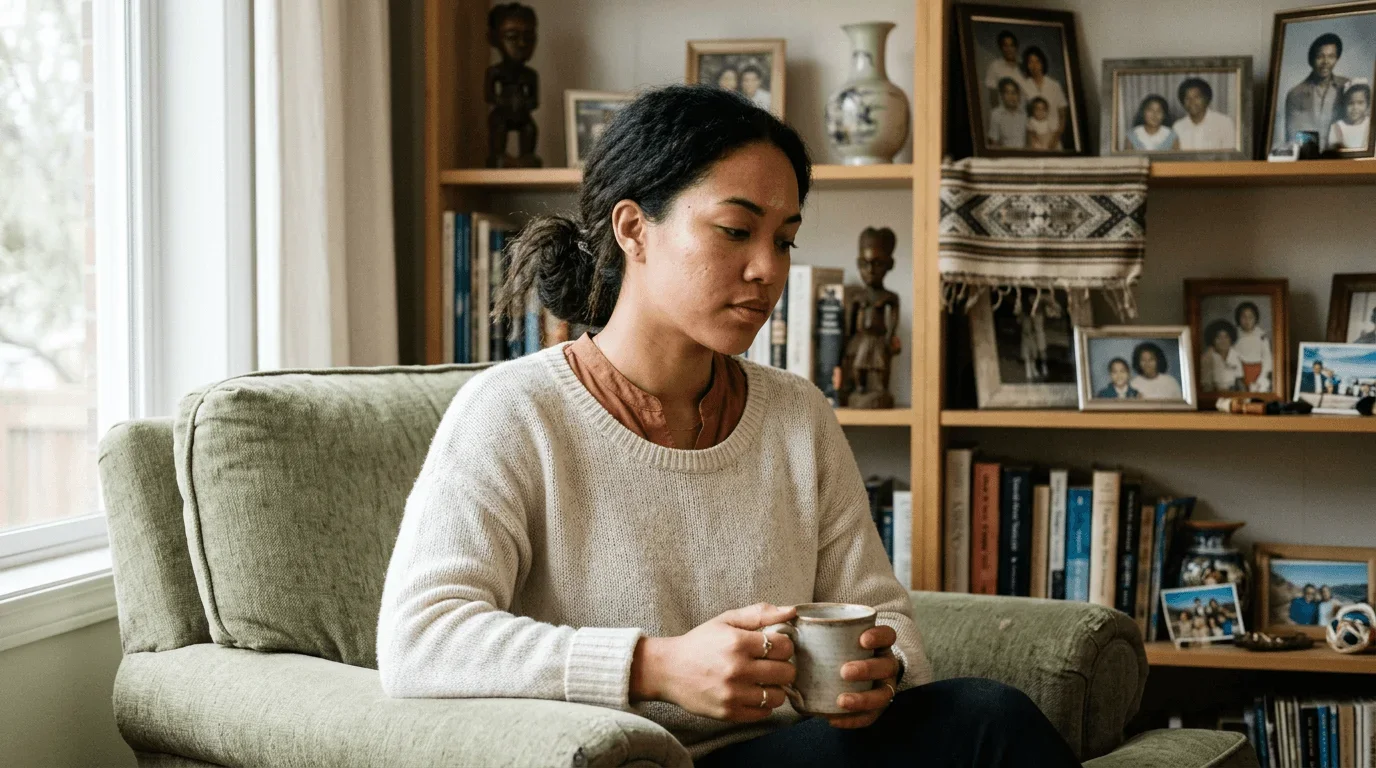
Breaking Cycles: The Complex Process of Transforming Family Patterns
Teresa Thompson emphasizes, “Understanding patterns of behavior in your family is not the same as transforming them. It requires a nuanced look at your own behavior and a willingness to build new interpersonal skills.”
Recognizing harmful family patterns is an important first step, but it is only a first step. For multiracial adults and mixed people navigating complex family dynamics, the gap between awareness and genuine transformation can feel vast. Dysfunctional communication styles, rigid cultural expectations, and inherited ways of relating do not dissolve simply because they have been named. Breaking these cycles requires active, ongoing change in one's own behavior and reactions, even when the people around you remain the same. This is especially true for those whose multicultural identity places them at the intersection of multiple family systems, each with its own unspoken rules and expectations.
The racial group and group membership dynamics that shape family systems run deep, and disrupting those patterns often comes at a real emotional cost. As Teresa notes, being a cycle breaker "can be lonely"—a reality that is particularly acute when family members are unwilling or unable to change alongside you. For multiracial adults, this loneliness can be compounded by the sense that their experience of holding multiple racial identities is not fully understood by anyone on either side of their family. The absence of that understanding can make an already difficult process feel even more isolating.
What makes this work sustainable over time is proactive skill-building and genuine self-awareness. Learning new ways to communicate, set boundaries, and show up differently in relationships—with family, partners, and friends—is what transforms insight into lasting change. For each multiracial adult navigating this process, the path forward will look different, shaped by their own history, identity development, and vision for the relationships they want to build. This is not about rejecting where you come from. It is about developing the interpersonal tools to move forward in a way that honors both your multicultural identity and your own long-term wellbeing.
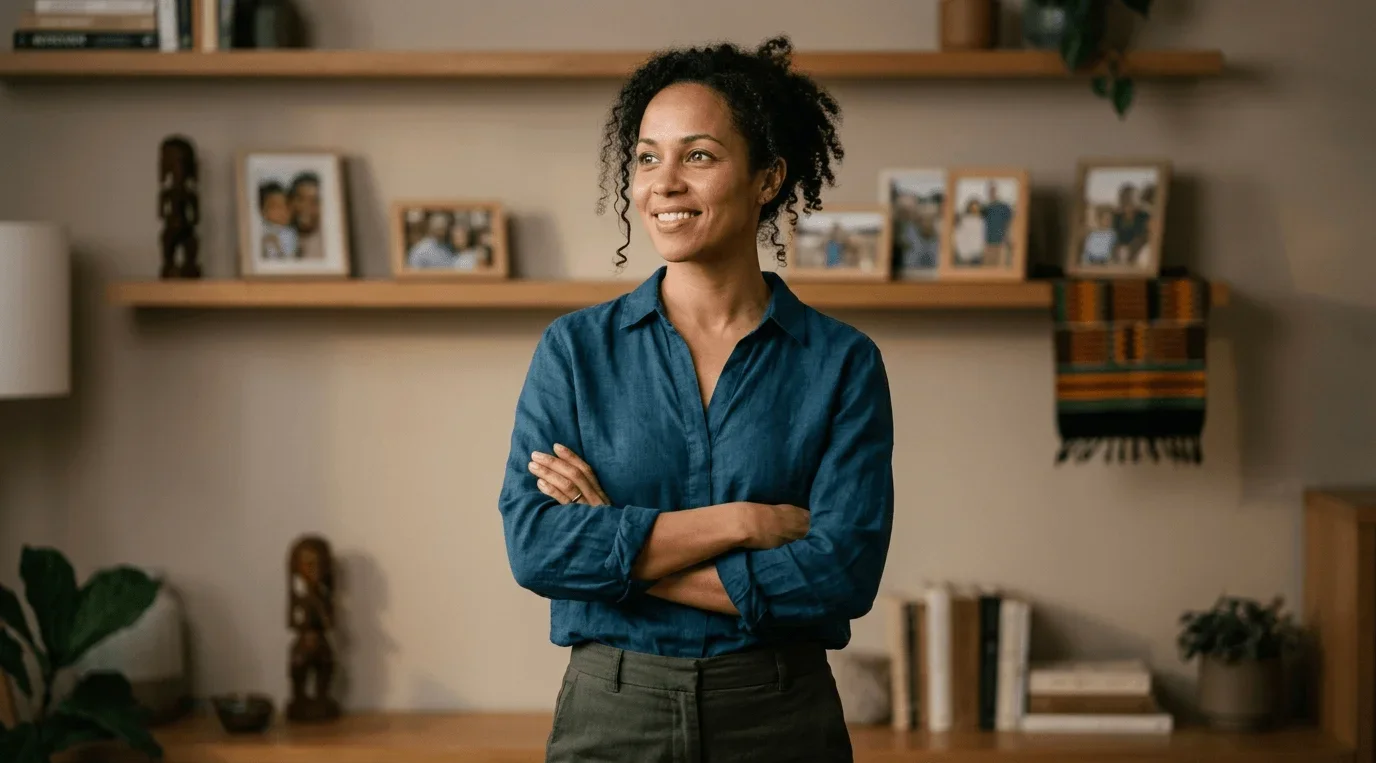
The Role of Grief and Ambiguous Loss in Mixed Cultural Family Dynamics
Navigating mixed cultural identity often involves grieving losses that are deeply felt but difficult to name. This may be the loss of an ideal parent, a childhood that did not unfold as hoped, or a cohesive family identity that never fully materialized—one where a person's multiracial identity was celebrated rather than treated as a source of tension or confusion. These ambiguous losses can be especially disorienting because they are not always visible or openly acknowledged by others, leaving individuals to process grief that the people around them may not even recognize as grief.
Feeling othered within one's own family—or caught between racial group expectations that never quite fit—adds another layer to this emotional experience that is rarely talked about openly. The absence of a shared experience or sense of full belonging can quietly accumulate over time, functioning as a genuine risk factor for depression, anxiety, and difficulties in forming secure relationships later in life. Therapy creates a safe space where these difficult emotions—anger, sadness, confusion, and mourning—can be expressed and honored without minimization. Teresa Thompson explains that helping clients "name and own" these ambiguous losses is essential in healing from familial and cultural wounds.
Impact of Family History on Romantic Relationships and Friendships
The imprint of family history runs through adult relationships in ways that are often invisible until they become impossible to ignore. For multiracial adults navigating the intersection of differing cultures and family expectations, the patterns absorbed in childhood—people-pleasing, taking on competitive roles, managing the emotional needs of others—have a way of reappearing in friendships and romantic partnerships, recreating dynamics that feel familiar even when they are harmful.
These relational patterns can be a significant risk factor for ongoing cycles of unhealthy connection, particularly when minority group membership or race experience has shaped a person's sense of how much space they are allowed to take up in relationships. The feeling of having been othered—within a family, a racial group, or a broader community—often leaves a mark on how individuals show up in their closest bonds as adults. Through therapy, individuals can safely examine these ingrained patterns, understand where they come from, and begin developing healthier, more authentic ways of relating. Teresa Thompson notes that while breaking out of these roles can feel frightening, it can also open the door to more fulfilling connections when done with the right support.
Expert Insights on Navigating Mixed Cultural Identity Challenges
According to Teresa Thompson, “Clients often report feeling less tense and more empowered as they expand their choices beyond family narratives, signaling real progress in healing.”
Progress in navigating mixed cultural identity challenges is often subtle before it becomes obvious. It shows up not in dramatic breakthroughs but in quieter shifts—a growing ability to make choices that reflect personal values rather than inherited expectations, a loosening of the tension that comes from constantly managing competing group memberships and racial group loyalties. Teresa Thompson explains that clients experiencing this kind of growth "feel less tense, less fatigued, and less wrapped up in their own head," a reminder that healing from identity-based stress is not just psychological—it registers in the body too.
For many multiracial individuals, one of the most significant risk factors in this process is the fear that personal growth means betraying their roots. The experience of having felt othered—by one side of the family, by a broader community, or by a society that struggles to hold multiracial identity with nuance—can make it harder to trust that there is a path forward that does not require choosing between belonging and becoming. Balancing loyalty to family with individual growth is genuinely complex, and it is rarely a linear process.
Culturally sensitive therapy creates the conditions for both to coexist. By honoring the shared experience and heritage a client carries while also making space for who they are becoming, a skilled therapist helps multiracial individuals move beyond the either/or framing that so often shapes these conversations. Tradition and personal development are not opposites, and the most meaningful therapeutic work helps clients feel that truth in a way that actually made them feel more whole, not less connected to where they came from.
Practical Tips for Managing Mixed Cultural Identity Challenges in Family Dynamics
Develop empathy by understanding different cultural perspectives within the family
Build communication skills to foster productive conversations
Seek therapy to safely explore identity and relational patterns
Allow space for grief and complex emotions without judgment
Create supportive relationships outside of family when needed
Common Challenges in Mixed Cultural Family Dynamics and How Therapy Helps
Balancing dual cultural expectations is one of the most frequently cited struggles among multiracial individuals, often manifesting as conflicting family rules and a deep confusion about which cultural framework to align with. Culturally informed therapy creates space for open dialogue around these tensions, helping clients make sense of competing messages without having to choose one side of their identity over another.
Breaking harmful family cycles is rarely straightforward, particularly when emotional isolation sets in and members of your family resist or are unable to change alongside you. Therapy in this context focuses on practical skill-building and self-awareness exercises that equip individuals with the tools to respond differently, even when the dynamics around them stay the same.
Processing ambiguous loss is another central challenge, as the grief that comes with unfulfilled family ideals is not always recognized or validated by others. Grief counseling and emotional validation within therapy give clients permission to mourn these intangible losses fully, which is often a necessary step before deeper healing can begin.
Finally, the patterns absorbed in family systems have a way of showing up again in adult friendships and romantic partnerships, recreating familiar but unhealthy dynamics in the relationships that matter most. Relationship-focused therapy and boundary-setting work help individuals recognize these patterns in real time and develop more authentic, sustainable ways of connecting with the people in their lives.

People Also Ask
What are common challenges faced by mixed race individuals in family settings?
Mixed race individuals commonly face identity conflicts stemming from balancing expectations of different cultures. They may experience tensions between external perceptions and how they view themselves authentically. Family loyalty and cultural expectations often contribute to emotional challenges, impacting mental health and relationships.
How can therapy help with mixed cultural identity challenges?
Therapy provides a safe and supportive environment to explore complex family, racial identity, and cultural dynamics. It helps clients understand and transform harmful patterns, develop new interpersonal skills, and process feelings of ambiguous loss and grief. Culturally sensitive therapy respects unique backgrounds while fostering personal growth.
What does breaking cycles mean in the context of family dynamics?
Breaking cycles involves moving beyond recognizing unhealthy family patterns to actively changing one’s behavior and relational responses. It requires self-awareness, skill-building, and often involves emotional challenges like isolation. It is an ongoing process aimed at healthier relationships and personal well-being.
Embracing Complexity and Growth in Mixed Cultural Identity Challenges
Navigating mixed cultural identity within family dynamics is some of the most layered, nuanced work a person can undertake. It asks for empathy—toward yourself and the people you come from—as well as a willingness to sit with complexity rather than rush toward resolution. The questions that arise in this process are rarely simple, and the answers are rarely clean. But that complexity is not a barrier to healing. With the right support, it becomes the very terrain through which genuine growth happens.
For multiracial and biracial individuals, this work often involves untangling a lifetime of competing expectations, ambiguous losses, and identity pressures that many people around them have never had to navigate. It means making space for grief alongside pride, for frustration alongside love, and for the recognition that honoring your heritage and honoring yourself are not mutually exclusive goals. Progress looks different for everyone, but it tends to show up in the same quiet, meaningful ways: more ease, more clarity, more freedom to make choices that actually feel like your own.
Culturally competent therapy provides a foundation for all of this. A therapist who genuinely understands the lived experience of navigating different cultures, racial identities, and multigenerational family dynamics can help you move beyond simply recognizing patterns and into the more transformative work of changing them. That kind of support does not ask you to leave any part of yourself at the door. It meets you in the full complexity of who you are and helps you build from there.
If you are ready to begin that journey, the culturally competent therapists at Salt River Therapy are here to support you. Click the button below to book your free consultation today and take the first step toward healing, growth, and a more authentic connection to yourself and the people you love.




Write A Comment